Historical Places in Philadelphia: 12 Must-Visit Landmarks for History Lover 2026
Philadelphia is one of the best cities in the United States for travelers who want to experience American history up close. From the room where the Declaration of Independence was debated to quiet historic streets lined with 18th-century homes, the city is filled with stories. Exploring the historical places in Philadelphia offers a chance to walk through centuries of American political, cultural, and social history.
Known as the “Birthplace of America,” Philadelphia played a central role in the founding of the United States. Many of its most important landmarks are located close together, making it easy to explore several attractions in a single day.
Historical Places in Philadelphia You Should Not Miss
1. Independence Hall
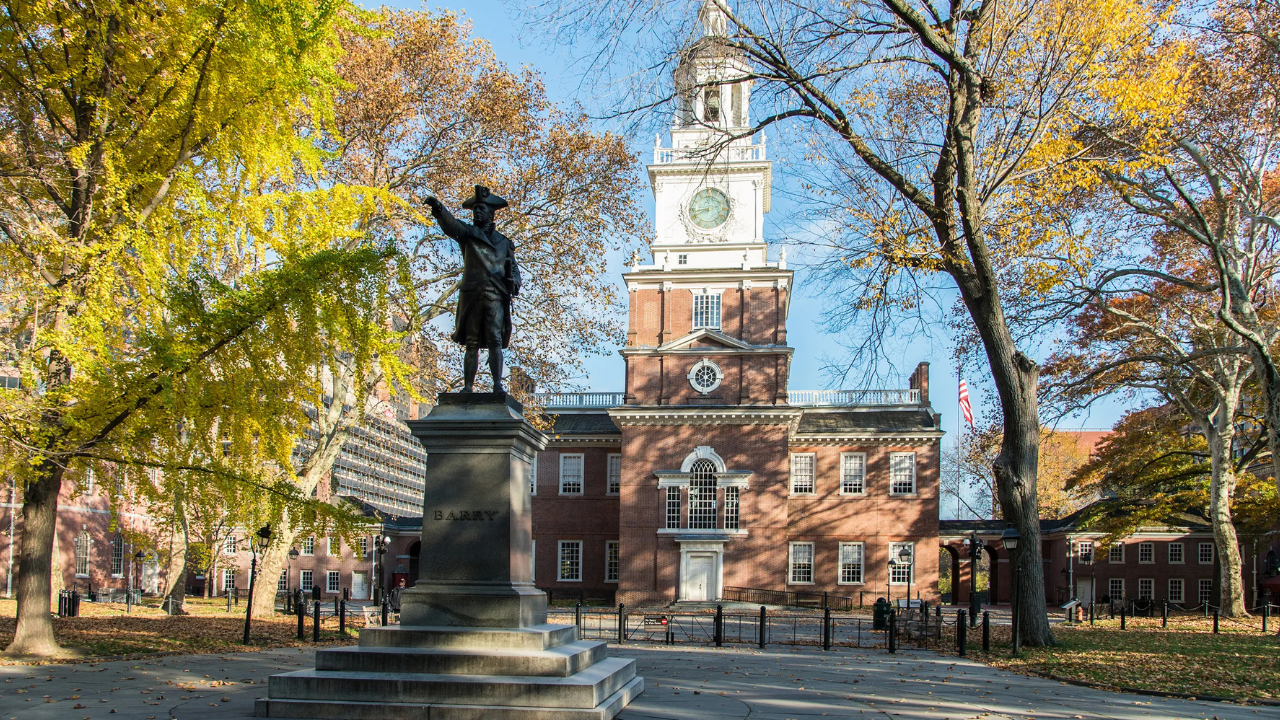
No history-focused visit to Philadelphia is complete without seeing Independence Hall. This famous red-brick building is where the Declaration of Independence was adopted in 1776.
The U.S. Constitution was also debated and signed here in 1787. Guided tours explain how the Founding Fathers shaped the new nation and give visitors a sense of the building’s remarkable importance.
Because timed entry can be required, check current visitor information before arriving. Starting your sightseeing early can also help you avoid the busiest periods.
2. Liberty Bell
Just across from Independence Hall stands the Liberty Bell, one of America’s most recognizable symbols. The famous crack in the bell has become part of its story, although its historical meaning goes far beyond its appearance.
The bell has been associated with liberty and independence for generations. Admission to see it is generally free, making it an easy addition to an Old City sightseeing itinerary.
3. Elfreth’s Alley
For a glimpse of everyday life in colonial Philadelphia, walk along Elfreth’s Alley. Dating back to 1702, it is widely recognized as the oldest residential street in the United States.
The narrow cobblestone lane is lined with historic homes and colorful doors. Unlike grand government buildings, Elfreth’s Alley shows how ordinary residents lived in Philadelphia centuries ago.
It is especially enjoyable for travelers interested in architecture and photography. Visit respectfully because this remains a residential neighborhood.
4. Betsy Ross House
The Betsy Ross House is another popular stop in Philadelphia’s historic district. It is traditionally associated with Betsy Ross, who is widely credited with making the first American flag.
The historical details surrounding the flag’s creation are debated by historians. Still, the house provides an interesting look at colonial domestic life and the stories that became part of America’s national mythology.
5. Museum of the American Revolution
History becomes more immersive at the Museum of the American Revolution. Its exhibitions explore the people, events, and conflicts that shaped the American Revolution.
Rather than focusing only on famous political leaders, the museum presents perspectives from soldiers, women, Indigenous peoples, enslaved people, and other communities. That broader approach makes it particularly worthwhile for visitors who want more context than traditional Revolutionary War sites provide.
Allow at least two hours if you want time to explore the main galleries. It is one of the most informative historical places in Philadelphia for understanding the Revolutionary era.
6. National Constitution Center
Located near Independence Mall, the National Constitution Center explores the history and continuing influence of the U.S. Constitution.
Interactive exhibits make this a good choice for families and visitors who prefer hands-on experiences. The center also hosts programs and presentations that connect America’s founding principles with modern civic life.
Its location makes it convenient to combine with Independence Hall and the Liberty Bell. Together, these attractions create an excellent introduction to the historical places in Philadelphia.
7. Christ Church
Christ Church dates to the colonial era and played an important role in early Philadelphia. George Washington, Benjamin Franklin, and other prominent figures worshipped here.
The church’s historic burial ground is also nearby. Walking through the grounds offers a quieter experience compared with the city’s larger attractions.
For travelers interested in early American religious and political history, it is a rewarding stop in Old City. It also adds another fascinating layer to the story told by the historical places in Philadelphia.
8. Christ Church Burial Ground
A short walk away, Christ Church Burial Ground contains the graves of several notable figures from America’s founding period. The most famous is Benjamin Franklin.
Franklin’s grave is easy to recognize because visitors have traditionally tossed pennies onto it. Beyond the famous grave, however, the cemetery provides a fascinating look at Philadelphia’s colonial past.
It can be visited relatively quickly, making it a useful stop between other historic attractions. Among the city’s historical places in Philadelphia, it offers a peaceful and reflective experience.
9. Franklin Court
Benjamin Franklin’s influence appears throughout Philadelphia, and Franklin Court offers a deeper look at his life. The site once stood where Franklin’s Philadelphia home was located.
Today, visitors can explore exhibits and see the archaeological remains of the house. The attraction helps explain Franklin’s work as a printer, scientist, inventor, diplomat, and civic leader.
It is one of the city’s best places to understand the man behind one of America’s most famous names. For anyone interested in historical places in Philadelphia, Franklin Court is a particularly worthwhile stop.
10. Eastern State Penitentiary
For something very different, head to Eastern State Penitentiary. Opened in 1829, this enormous former prison became famous for its revolutionary approach to incarceration.
Its radial design allowed guards to observe prisoners from a central point. Today, visitors can walk through the deteriorating cellblocks and learn about the prison’s history.
The atmosphere is striking, making it particularly popular with travelers interested in unusual historical attractions. Check seasonal hours and tour options before visiting.
11. African American Museum in Philadelphia
Philadelphia’s history cannot be fully understood without exploring the experiences of African Americans. The African American Museum in Philadelphia presents exhibitions covering Black history, culture, art, and community life.
Its location near the historic district makes it easy to include in a wider sightseeing day. The museum adds important perspectives that complement the traditional stories of America’s founding.
Visitors should check current exhibitions because displays and programs change throughout the year. It is an important addition to any itinerary focused on historical places in Philadelphia
12. Washington Square
Washington Square is one of Philadelphia’s five original public squares planned during the colonial period. Today, it provides a peaceful green space in the middle of the historic district.
The park has connections to Philadelphia’s Revolutionary-era history and is also part of the larger Independence National Historical Park area. It is an ideal place to slow down after visiting museums and historic buildings.
Best Way to Explore Philadelphia’s Historic District
Many of the city’s most important landmarks are concentrated around Old City and Independence Mall. This makes Philadelphia unusually convenient for history lovers.
Begin your day at Independence Hall and the Liberty Bell. From there, walk toward the Museum of the American Revolution, Franklin Court, and Christ Church. Continue north toward Elfreth’s Alley if you have additional time.
Comfortable walking shoes are essential because the best way to experience historic Philadelphia is on foot. Cobblestone streets and long walking distances can be tiring, especially during summer.
For travelers researching historical places in Philadelphia, planning your route in advance can help you see more attractions without spending too much time traveling between them.
When to Visit Philadelphia for History and Sightseeing
Spring and fall are excellent seasons for exploring Philadelphia. Temperatures are generally comfortable for walking, and the city’s historic neighborhoods are particularly enjoyable outdoors.
Summer brings longer days but can be hot and busy. Winter is quieter, although shorter daylight hours can limit outdoor sightseeing.
For popular attractions such as Independence Hall, check official schedules and reservation requirements before your trip. Planning ahead is especially important during holidays and peak travel periods.
Final Thoughts
Philadelphia’s historic attractions offer much more than famous buildings and old monuments. They reveal the people, debates, struggles, and ideas that helped shape the United States.
From Independence Hall and the Liberty Bell to Elfreth’s Alley and Eastern State Penitentiary, the city’s past appears in many different forms. Whether you have one day or several, exploring these historical places in Philadelphia can turn a simple city break into a memorable journey through American history.
If you are planning a history-focused trip, these historical places in Philadelphia provide an excellent starting point for discovering the city’s remarkable past.